
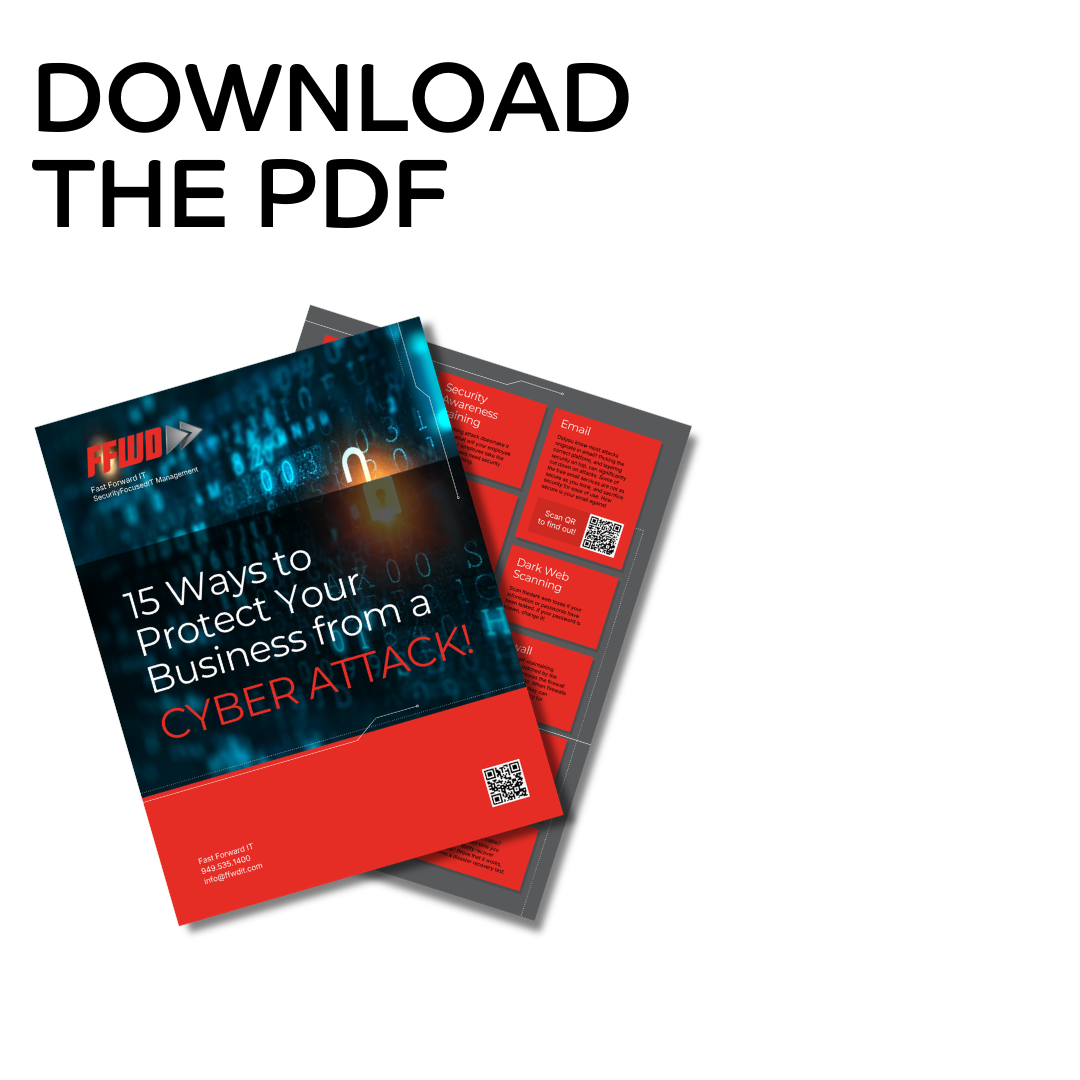
15 Ways to Protect Your Business from a Cyber Attack
Cyber attacks are not just targeting large corporations anymore. Small and mid-sized businesses are often the primary focus because attackers know many companies lack layered security protections.
The reality is simple. If your business relies on technology, you are a potential target.
The good news is that protecting your company does not require guesswork. With the right cybersecurity strategy in place, you can significantly reduce your risk and strengthen your defenses.
Below are 15 practical ways to protect your business from a cyber attack and build a stronger security foundation.
1. Start with a Security Assessment
You cannot protect what you do not understand.
A professional security assessment identifies vulnerabilities, misconfigurations, outdated systems, and gaps in your current defenses. Many businesses operate for years without conducting a formal review. That leaves blind spots attackers can exploit.
If you do not know your weaknesses, neither does your competition. But attackers will find them.
2. Turn On Multifactor Authentication (MFA)
Passwords alone are no longer enough.
Multifactor authentication adds an extra layer of security by requiring a second verification step, such as a mobile code or authentication app. Even if a password is stolen or guessed, MFA can prevent unauthorized access.
Every system that supports MFA should have it enabled, especially email and financial platforms.
3. Implement SIEM and Log Management
If suspicious activity happens on your network, would you know?
Security Information and Event Management systems collect and analyze logs from across your environment. This allows your team to detect unusual behavior quickly and investigate incidents properly.
Logs also help determine how an attack happened so you can prevent it from happening again.
4. Provide Security Awareness Training
Most cyber attacks begin with phishing emails.
Technology helps filter threats, but employees are still the last line of defense. Without training, even well-meaning team members can accidentally click malicious links or share sensitive information.
Regular security awareness training teaches employees how to recognize and respond to suspicious activity.
5. Keep Software Patched and Updated
Outdated software is one of the most common entry points for attackers.
Applications such as Microsoft Office, Java, Acrobat, browsers, and even small utilities must be updated consistently. A structured patch management process ensures every device stays current and protected against known vulnerabilities.
If software is not patched, attackers will eventually find it.
6. Invest in 24/7 Security Monitoring
Cybercriminals operate around the clock. Your security should too.
Continuous monitoring allows threats to be detected and contained before they escalate into full-scale incidents. Today, 24/7 monitoring is accessible for businesses of all sizes, not just large enterprises.
Early detection makes a significant difference in limiting damage.
7. Use Advanced Endpoint Detection and Response (EDR)
Traditional antivirus software relies on known file signatures. Modern attacks are far more sophisticated.
Endpoint Detection and Response tools monitor behavior, identify suspicious patterns, and protect against fileless attacks that traditional antivirus solutions often miss.
Advanced protection at the device level is critical in today’s threat landscape.
8. Monitor the Dark Web for Exposed Credentials
Stolen usernames and passwords frequently appear on the dark web.
If your employee credentials are leaked, attackers may attempt to use them to gain access to your systems. Dark web monitoring alerts you when your information has been exposed so you can reset credentials immediately.
This simple step can prevent a major breach.
9. Maintain a Secure and Updated Firewall
A firewall acts as a barrier between your internal network and external threats.
However, firewalls must be properly maintained and updated. An outdated firewall can become a vulnerability rather than a defense. A self-maintaining, regularly patched firewall ensures your perimeter protection remains strong.
10. Encrypt All Devices
What happens if a laptop is lost or stolen?
Without encryption, sensitive data may be easily accessed. Device encryption ensures that even if hardware is compromised, the information stored on it remains protected.
This is especially important for devices containing financial data, customer information, or saved credentials.
11. Test Your Backups Regularly
Backups are your last line of defense against ransomware and data loss.
However, backups must be tested to ensure they work. Businesses should confirm that data can be restored quickly and that backups are immutable, meaning they cannot be altered or deleted by attackers.
Untested backups provide a false sense of security.
12. Use a Secure Password Manager
Storing passwords in spreadsheets or unsecured documents creates unnecessary risk.
A business-grade password manager securely stores credentials, generates strong passwords, and can alert you if any have been exposed. It improves both security and employee productivity.
Strong password practices are foundational to cybersecurity.
13. Develop and Test a Disaster Recovery Plan
If your systems go down tomorrow, how quickly could you recover?
A documented disaster recovery plan outlines the steps needed to restore operations after an incident. More importantly, the plan should be tested regularly to ensure it works under real-world conditions.
Preparation reduces downtime and protects revenue.
14. Understand Your Cybersecurity Insurance Requirements
Cybersecurity insurance can help offset financial losses after a breach. However, insurers often require proof that proper security controls are in place.
Failure to maintain systems properly can result in denied claims. Align your IT practices with your insurance policy requirements to avoid unpleasant surprises.
15. Strengthen Your Email Security
Most cyber attacks originate in email.
Choosing the right email platform and layering additional protections significantly reduces risk. Some free email services prioritize convenience over security, which can leave businesses exposed.
Advanced email filtering, authentication protocols, and user training together create a stronger defense.
Final Thoughts
Cybersecurity is not a one-time project. It requires consistent attention, updated tools, and informed employees.
By implementing these 15 security measures, your business builds multiple layers of protection that make it far more difficult for attackers to succeed.
If you are unsure where to begin, start with a professional security assessment. Identifying gaps today can prevent serious consequences tomorrow.